 SaferGrains
Inorganic arsenic (iAs) in rice: why it matters for long-term health
Rice is a daily staple for billions of people worldwide, and in many countries it is eaten over decades. Unlike most grains, rice is particularly effective at taking up arsenic from soil and irrigation water, which means arsenic in rice is not a rare “contamination event” — it’s a widespread, chronic exposure issue. The most biologically impactful form of arsenic to humans is inorganic arsenic (iAs).
1) Prevalence of arsenic in rice worldwide
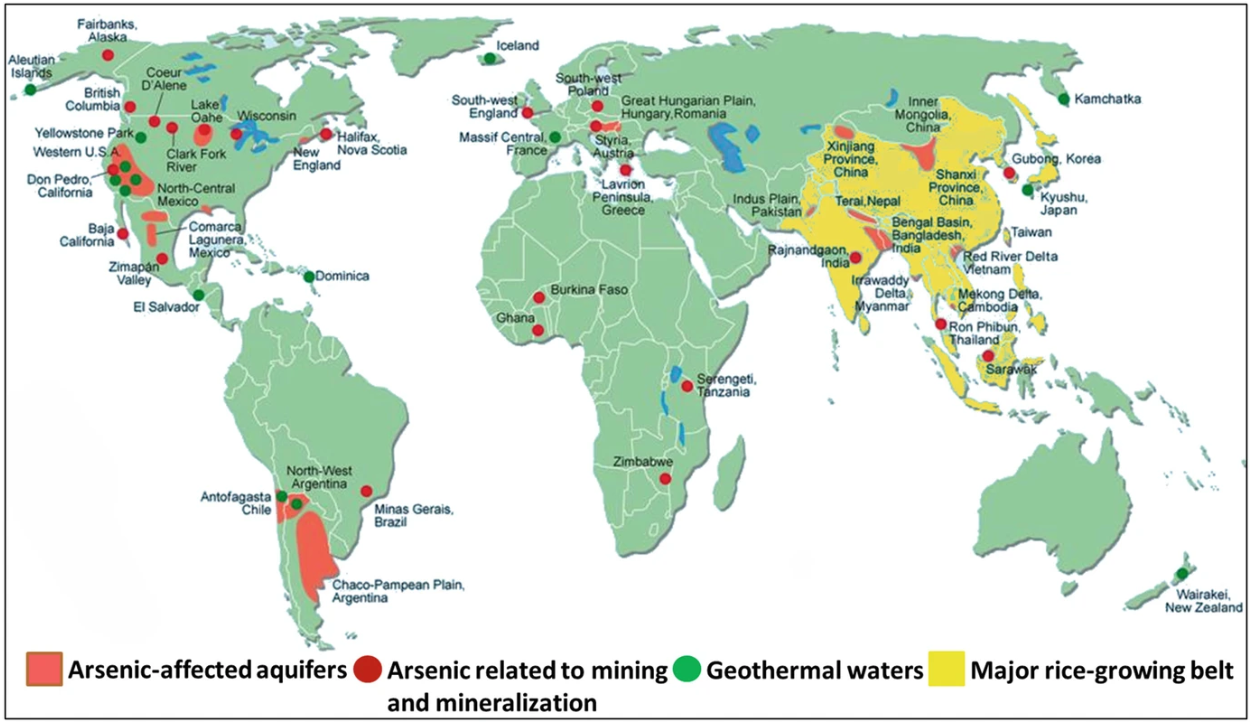
Arsenic is a naturally occurring element found in rocks, soil, and water. When water containing arsenic is used for irrigation and food preparation, it can become a sustained exposure pathway through diet.
Rice is unusually prone to arsenic uptake because flooded paddy conditions and rice transport mechanisms can increase arsenic accumulation compared with other cereal crops — some reviews report rice can accumulate substantially more arsenic than grains like wheat or barley.
And because rice is a primary staple for more than half the world’s population, even modest levels matter at population scale.
2) Arsenic is a Group 1 carcinogen with multiple adverse health effects
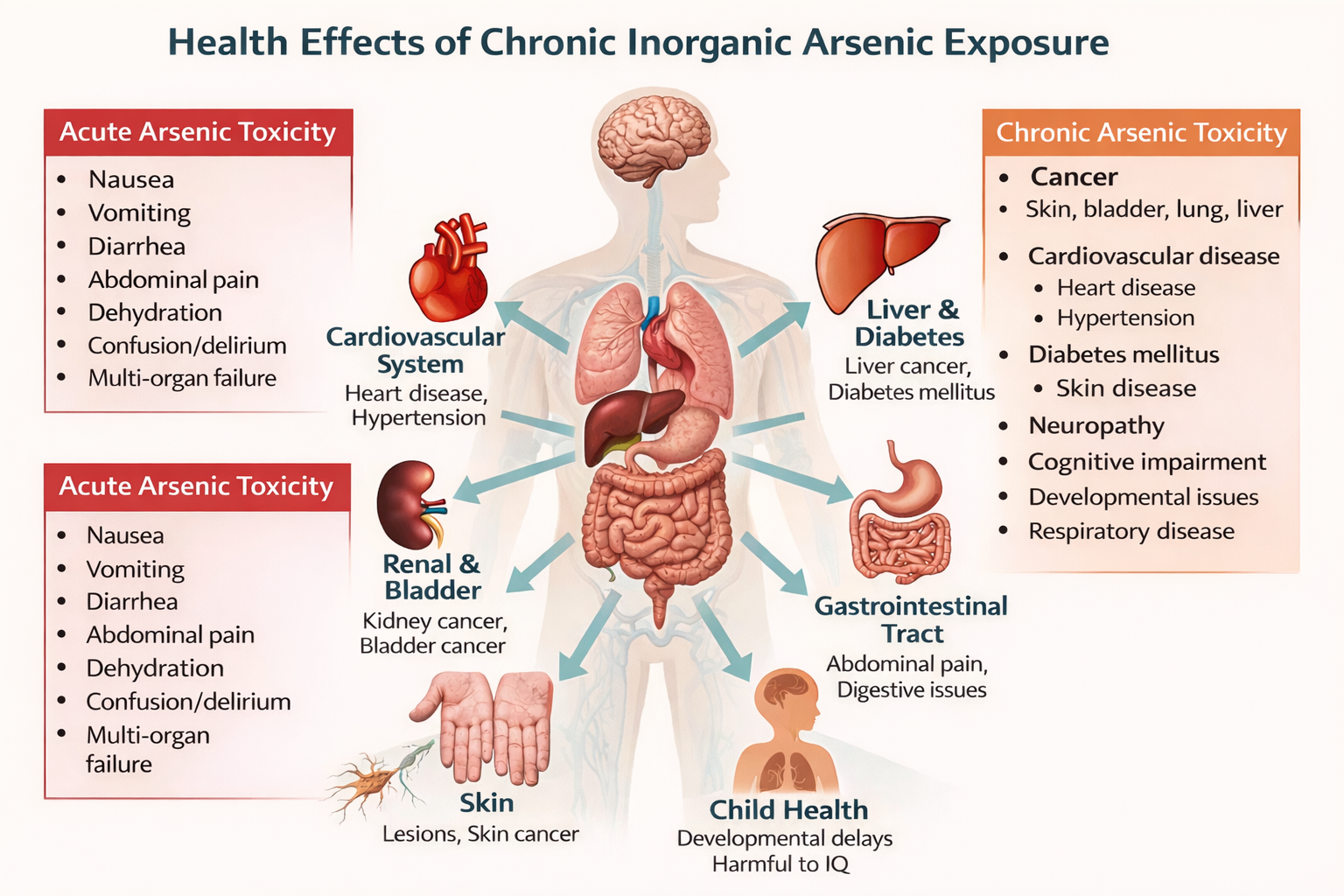
The key health concern is inorganic arsenic (iAs). It is classified as carcinogenic to humans (Group 1) by the IARC Monographs.
Long-term exposure to inorganic arsenic is associated with a broad range of adverse outcomes, including cancers and non-cancer effects such as cardiovascular disease and neurological impacts (these can take years to develop).
3) Regulatory limits are not the same as safe exposure levels
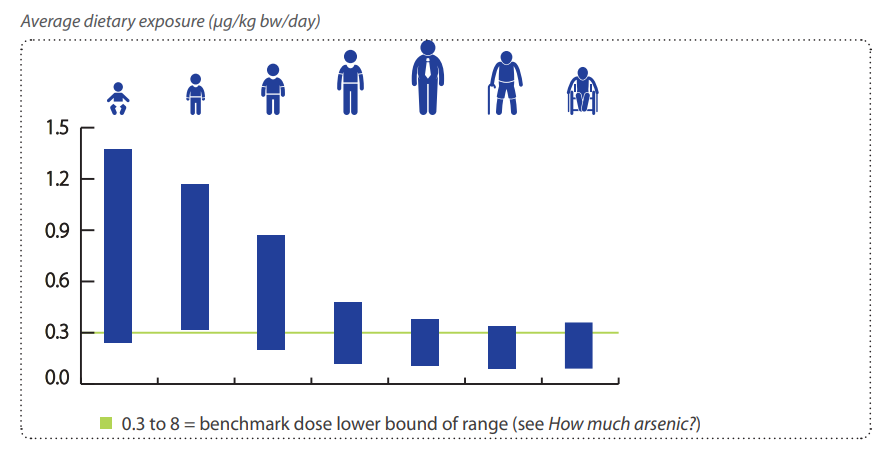
Regulatory limits (“maximum levels” or “action levels”) are policy tools designed to reduce risk and enforce achievable standards — they are not a declaration of safety at that level.
The EU sets maximum levels for inorganic arsenic in various foods including rice via its contaminants framework.
The U.S. FDA uses an action level for inorganic arsenic in infant rice cereal (100 ppb) to reduce exposure and guide enforcement.
Risk assessors caution that benchmark dose ranges and similar reference points are tools for risk evaluation, not safety guarantees.
EFSA, for instance, explains that its benchmark-dose range is not a “safe level”; it’s a tool to evaluate how close population exposures are to levels associated with increased risk.
A related signal of seriousness: the FAO/WHO expert committee (JECFA) withdrew its previous tolerable intake guidance for inorganic arsenic, noting it was no longer appropriate given the proximity to risk-based reference points.
Bottom line: for a genotoxic carcinogen, the practical public-health objective is generally to keep exposure as low as reasonably achievable, not to treat a legal limit as “safe.”
4) iAs vs other forms of arsenic
“Arsenic” is not a single chemical.
- Inorganic arsenic (iAs) is generally considered the most toxic and most relevant for long-term health risk.
- Organic arsenic forms (often found in seafood) are typically less harmful, though some organic species (e.g., DMA/MMA) remain under active study.
This is why many standards and risk assessments focus specifically on inorganic arsenic, not total arsenic.
5) Health impact of inorganic arsenic (iAs)
5.1 Cancer (carcinogenicity)
Inorganic arsenic (iAs) is classified as carcinogenic to humans (Group 1). The strongest and most consistent evidence in humans is for cancers of the lung, bladder, and skin.
Mechanistic studies show that iAs can promote carcinogenesis through multiple pathways, including:
- Increased oxidative stress
- Impaired DNA repair
- Altered cell signaling
- Epigenetic changes
These mechanisms help explain why chronic, low-dose exposure over long periods can increase lifetime cancer risk, even in the absence of acute toxicity.
5.2 Cardiovascular (CV) and circulatory effects
A substantial body of epidemiological evidence links long-term inorganic arsenic exposure with cardiovascular disease, including:
- Coronary heart disease
- Stroke
- Peripheral arterial disease
- Hypertension
Proposed biological mechanisms include chronic inflammation, endothelial dysfunction, oxidative stress, and disruption of nitric-oxide signaling. Cardiovascular outcomes are often considered one of the most important non-cancer health effects associated with chronic iAs exposure.
5.3 Neurological effects
Chronic exposure to inorganic arsenic has been associated with neurological effects, including peripheral neuropathy and alterations in nervous system function. Arsenic is known to cross the blood–brain barrier, and long-term exposure has been linked to changes in neuronal signaling and neurotoxicity. These effects may not be immediately apparent and can develop gradually with sustained exposure.
5.4 Cognitive and developmental effects
Early-life exposure to inorganic arsenic has received particular attention because of potential impacts on cognitive development. Systematic reviews and epidemiological studies report associations between arsenic exposure and reduced IQ, impaired memory and attention, and effects on executive function and learning. Developing brains appear to be more vulnerable than adult brains, making chronic dietary exposure during pregnancy and childhood a key public-health concern.
5.5 Diabetes and metabolic effects
Several major health authorities note associations between long-term inorganic arsenic exposure and diabetes, particularly type 2 diabetes. Meta-analyses and systematic reviews report a positive association between arsenic exposure and diabetes risk, while also noting variability between studies due to differences in exposure assessment, population, and study design.
5.6 Pregnancy and early-life outcomes
Human studies have reported associations between arsenic exposure and adverse pregnancy outcomes, including:
- Low birth weight
- Stillbirth
- Spontaneous abortion
Arsenic can cross the placenta, and fetal development may be particularly sensitive to toxic exposures. As with other endpoints, results vary by study design and exposure level, but the overall literature supports concern for early-life vulnerability.
5.7 Rice as a contributor to inorganic arsenic exposure
While many health-outcome studies involve drinking-water exposure, multiple population and controlled-diet studies show that rice consumption can materially increase inorganic arsenic exposure, as measured by urinary arsenic biomarkers. These findings support rice as a meaningful dietary exposure pathway, particularly for populations with high rice consumption.
Note on interpretation: Many health-outcome studies involve drinking-water exposure. The key point for dietary risk is that the biologically relevant form is inorganic arsenic (iAs), and rice can be a meaningful contributor to total iAs intake in frequent rice eaters.